









Singapore-Indonesia Partnership: Market Entry Opportunities
For businesses considering regional growth, timing can be just as important as strategy. While market size, customer demand, and competition often dominate expansion decisions, another factor is frequently overlooked: the strength of the relationship between the countries involved.
The latest Singapore-Indonesia Leaders’ Retreat is a good example. Although the announcements primarily focused on strengthening bilateral cooperation across sectors such as the digital economy, artificial intelligence (AI), sustainability, energy, connectivity, food security, and human capital development, they also provide valuable insights into the direction both governments are taking.
For companies exploring Singapore business expansion to Indonesia or Indonesian businesses looking to establish a presence in Singapore, the significance lies not in any single agreement, but in the broader message. Both governments are reinforcing their commitment to long-term economic collaboration, creating a more supportive environment for investment, innovation, and cross-border business partnerships.
It is important to clarify that these developments do not introduce new market entry rules or automatically make it easier to establish a business in either country. Companies must still comply with local regulations, incorporation requirements, licensing, and tax obligations. However, stronger bilateral cooperation often creates greater confidence for businesses planning long-term investments and opens more opportunities for collaboration across industries.
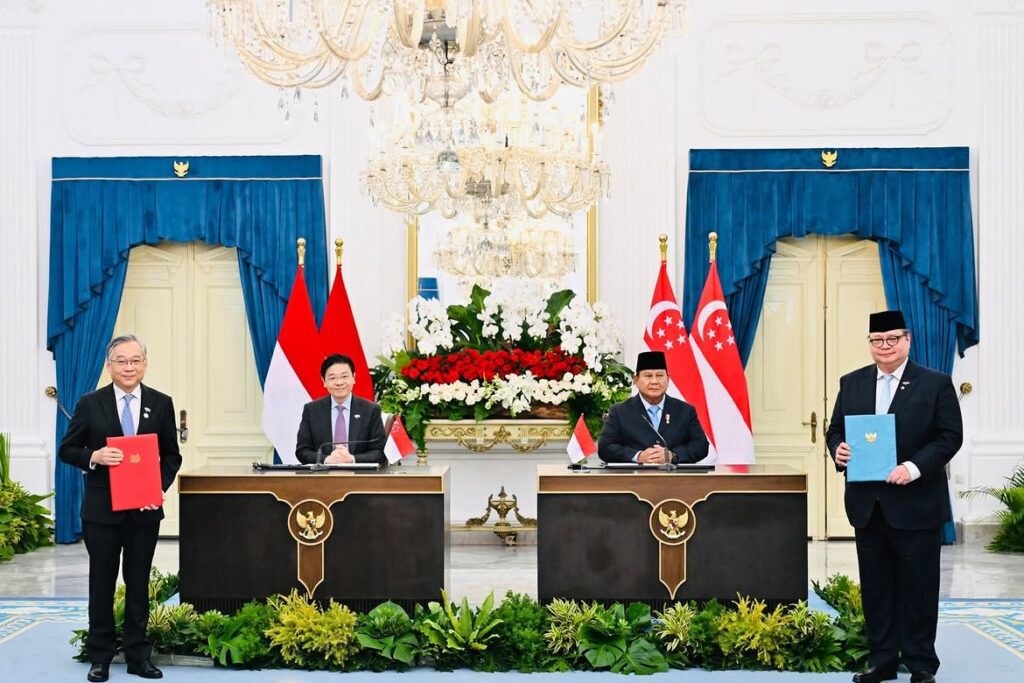
Source: Cabinet Secretariat of The Republic of Indonesia
Why Government Partnerships Matter for Business Expansion
Many business owners view diplomatic meetings as political events with little relevance to their day-to-day operations. In reality, government cooperation often shapes the business environment in ways that are less visible but equally important.
When two governments align their priorities, it sends a strong signal to investors, financial institutions, industry associations, and businesses that both countries are committed to maintaining a stable and collaborative economic relationship. This can encourage greater cross-border investment, facilitate industry partnerships, and support the development of sectors identified as strategic priorities.
For businesses, this means expansion decisions are no longer based solely on market potential. They are also influenced by the confidence that both governments are working towards a predictable and supportive business environment.
What the Latest Strategic Partnership Signals
One of the most notable aspects of the Leaders’ Retreat is the focus on future-oriented industries rather than traditional trade alone. The discussions highlighted cooperation in areas including:
- Artificial Intelligence (AI) and the digital economy
- Renewable energy and sustainability
- Carbon capture and green development
- Energy cooperation
- Connectivity and infrastructure
- Food security
- Talent and human capital development
Rather than viewing these as separate initiatives, businesses should see them as indicators of where future investment and collaboration are likely to grow. Companies operating within these sectors, or those supporting them through professional services, technology, consulting, logistics, or manufacturing, may find increasing opportunities as bilateral cooperation continues to deepen.
Opportunities for Singapore Companies Expanding into Indonesia
Indonesia remains one of Southeast Asia’s most attractive growth markets, supported by its large population, expanding middle class, and rapidly developing digital economy. Singapore has also consistently been one of Indonesia’s largest sources of foreign direct investment, reflecting the long-standing economic ties between both countries.
The renewed strategic partnership reinforces this relationship by strengthening cooperation in industries expected to drive future economic growth. While the regulatory landscape remains unchanged, businesses can take confidence from the continued commitment of both governments to encourage investment and collaboration.
For Singapore companies, this is an opportunity to look beyond traditional market entry and consider broader forms of collaboration, such as strategic partnerships, joint ventures, technology transfer, and business matching with local Indonesian companies.
Success, however, still depends on understanding the Indonesian market, choosing the appropriate business structure, complying with local regulations, and building relationships with trusted local partners.
Opportunities for Indonesian Companies Expanding into Singapore
The partnership also presents opportunities for Indonesian businesses seeking regional growth.
Singapore continues to be recognised as a leading financial and business hub in Asia, providing access to international investors, multinational corporations, financial institutions, and global supply chains. For Indonesian companies looking to expand beyond the domestic market, Singapore offers a strategic base for regional operations.
As cooperation between both governments strengthens, businesses may benefit from greater collaboration opportunities, knowledge sharing, and access to Singapore’s well-developed business ecosystem.
For many Indonesian SMEs, establishing a presence in Singapore is not only about entering a new market but also about positioning the business for broader expansion across Southeast Asia.
Key Takeaways for Businesses
The Singapore-Indonesia Leaders’ Retreat should not be interpreted as a shortcut to overseas expansion. Regulatory requirements, compliance obligations, and market challenges remain essential considerations for any business entering a new country.
However, the partnership does provide something equally valuable: a strong indication that both governments are committed to fostering a more collaborative economic environment.
For businesses considering Singapore business expansion to Indonesia or Indonesia market entry for Singapore companies, this is an encouraging signal. Stronger bilateral cooperation can create greater confidence for investment, support industry collaboration, and help build the ecosystem that enables sustainable cross-border growth.
Ultimately, successful market expansion is not driven by government announcements alone. It is built on preparation, local market knowledge, trusted partnerships, and a clear long-term strategy. Businesses that align these fundamentals with the opportunities emerging from stronger Singapore-Indonesia relations will be in the best position to succeed.
Frequently Asked Questions
1.) Does the Singapore-Indonesia Strategic Partnership make it easier to expand a business?
Not directly. The partnership does not change incorporation procedures or regulatory requirements. However, it strengthens government cooperation, encourages investment, and creates a more supportive environment for cross-border business collaboration.
2.) Why is Singapore an attractive market for Indonesian businesses?
Singapore offers access to international investors, regional headquarters, professional services, and global markets. Many Indonesian companies use Singapore as a strategic base for expanding across ASEAN.
3.) Why are more Singapore companies expanding into Indonesia?
Indonesia offers one of Southeast Asia’s largest consumer markets, a growing digital economy, and increasing opportunities across industries such as technology, manufacturing, renewable energy, and professional services.
