










KITAS application Indonesia is one of the most searched immigration topics among expats, investors, and Singaporean professionals planning to relocate or work here legally. And for good reason.
Indonesia is no longer just a holiday destination or an offshore manufacturing base. It is a market where foreign professionals take director roles, where Singaporean companies run active PT PMA operations, and where entrepreneurs build real businesses that require genuine long-term residency.
But living and working in Indonesia without the correct permit creates serious legal exposure. A tourist visa does not permit employment. A business visit visa does not allow residency beyond 60 days. The KITAS application Indonesia is the legal instrument that makes long-term foreign presence here genuinely compliant.
This guide explains the full KITAS application process from start to finish. Every step is written plainly, every deadline is clearly stated, and every government portal link is included so you always know exactly where to go. If this is your first time navigating Indonesian immigration, you will follow this guide without difficulty.
| 2026 update: This guide reflects KITAS regulations under Indonesia Immigration Law No. 6/2011, Government Regulation No. 31/2013, and 2026 ministerial circulars. Confirm current fees and document requirements at izin.imigrasi.go.id before submitting any application. |
What Is the KITAS and Why Does Every Foreign Resident Need One?
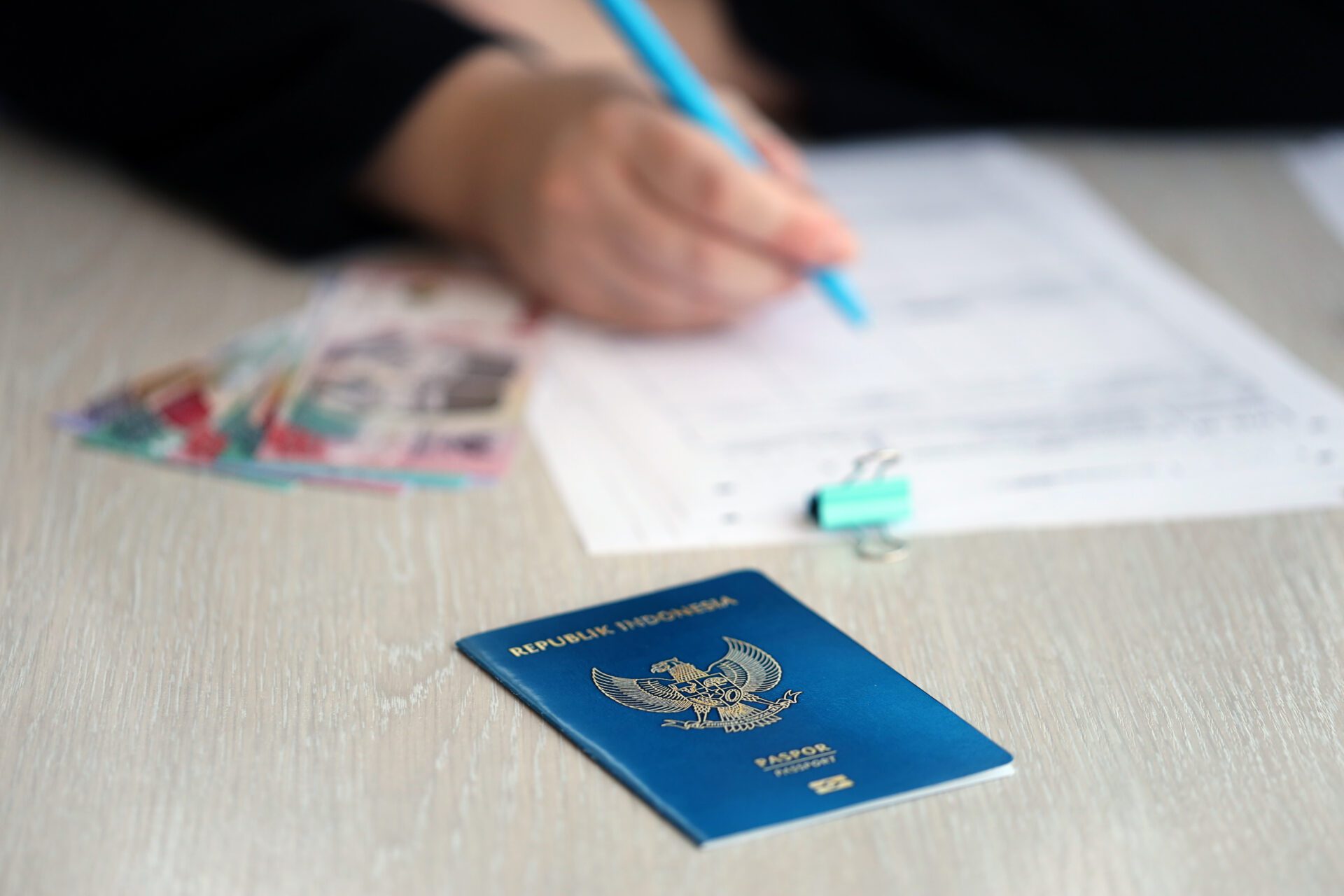
KITAS, short for Kartu Izin Tinggal Terbatas, translates to Limited Stay Permit Card. The Directorate General of Immigration (Direktorat Jenderal Imigrasi) under Indonesia’s Ministry of Law and Human Rights issues it.
Think of it this way. Your passport gets you through Indonesian customs on arrival. A visa allows you to stay for a limited visit. But the KITAS is what makes you a legal, long-term resident. It is the document that unlocks your ability to work, open a bank account, sign a long-term lease, and interact with government authorities as a recognised resident of Indonesia.
Any foreign national who plans to reside in Indonesia beyond a short tourist or business visit needs a KITAS. Specifically, the following categories of foreign nationals require one.
- Foreign directors and employees of PT PMA or any other Indonesian legal entity
- Foreign investors residing in Indonesia to manage their Indonesian company or investment
- Spouses and dependent children of foreign KITAS holders or Indonesian citizens
- International students enrolled at accredited Indonesian educational institutions
- Foreign retirees aged 55 and above who meet the financial and health requirements
- Foreign religious workers and social volunteers sponsored by recognised organisations
| Critical distinction: Entering Indonesia on a tourist or business visit visa and then conducting employment activities is a direct violation of Indonesia’s Immigration Law No. 6/2011. It carries the risk of deportation and a re-entry ban. The Indonesia KITAS permit is the correct legal instrument for anyone working here, including PT PMA directors. |
Types of KITAS: Choosing the Right Category
Before starting the KITAS application process, identify which type of KITAS matches your situation. Each type has different eligibility criteria, sponsoring entities, and required documents.
| KITAS Type | Who It Is For | Sponsoring Entity |
| Work KITAS (KITAS TKA) | Foreign employees and directors actively working for an Indonesian company | Indonesian employer (PT PMA, PT Lokal, or other registered entity) |
| Investment KITAS | Foreign nationals who own a qualifying equity stake in an Indonesian company | The PT PMA or other Indonesian company in which the investor holds shares |
| Spouse KITAS | Foreign nationals married to an Indonesian citizen | The Indonesian citizen spouse |
| Dependent Family KITAS | Spouses and minor children of existing foreign KITAS or KITAP holders | The primary KITAS or KITAP holder |
| Student KITAS | Foreign students enrolled in accredited Indonesian educational institutions | The Indonesian educational institution |
| Retirement KITAS | Foreign nationals aged 55 or above meeting financial and health requirements | Licensed retirement visa agent or direct application |
| Second Home Visa (Linked Permit) | High-net-worth individuals making a qualifying fixed deposit in Indonesia | Bank Indonesia or a designated commercial bank |
For Singaporean entrepreneurs and foreign professionals, the most relevant categories are the Work KITAS and the Investment KITAS. This guide focuses primarily on the Work KITAS process, since it is the most common path for PT PMA directors, foreign executives, and employees of Indonesian companies.
KITAS Requirements Indonesia: The Complete Document Checklist
Document completeness is the single biggest factor in whether a KITAS application moves quickly or stalls at a government office. Arrive at any appointment with an incomplete package and expect at least 1 to 2 weeks of additional delay. Gather every document on this list before scheduling any government appointment.
Documents from the Foreign Applicant
- Valid passport with at least 18 months of remaining validity from the KITAS intended start date
- Colour passport photographs, white background, both 3 x 4 cm and 4 x 6 cm sizes, taken within the past 3 months
- Curriculum vitae or resume showing relevant work history and educational qualifications
- Highest educational certificate or degree, apostilled or legalised by the relevant authority in the issuing country
- Professional certifications relevant to the proposed work position, where applicable
- Health certificate from an accredited medical practitioner confirming fitness for work or residency
- Police clearance certificate (SKCK equivalent), from the applicant’s home country, issued within the past 6 months
Documents from the Sponsoring Indonesian Company (Work KITAS)
- Company Notarial Deed (Akta Pendirian) and SK Kemenkumham
- NIB (Nomor Induk Berusaha) from the OSS portal
- Corporate NPWP (tax identification number)
- Domicile Letter (Surat Keterangan Domisili Perusahaan)
- Approved RPTKA (Foreign Worker Utilisation Plan approved by Ministry of Manpower)
- Approved IMTA (Foreign Worker Employment Permit from Ministry of Manpower)
- Appointment letter or employment contract between the sponsoring company and the foreign applicant
Documents for a Spouse KITAS
- Marriage certificate recognised by the Indonesian government
- Indonesian spouse’s KTP (national identity card) and KK (family card)
- Sponsor’s valid KITAS or Indonesian residency document
- Proof of financial stability such as bank statements or a sponsorship letter from the Indonesian spouse
| Translation requirement: Every foreign-language document must carry a sworn Bahasa Indonesia translation from a Penerjemah Tersumpah, an officially registered sworn translator recognised by the Ministry of Law and Human Rights. A standard bilingual translation or general translation service does not satisfy this requirement at Indonesian government offices. |
Eligibility Requirements for Each KITAS Type
Meeting the KITAS requirements Indonesia checks goes beyond assembling documents. Each permit category has specific eligibility criteria that the immigration authority and the Ministry of Manpower assess during processing.
Work KITAS Eligibility
To qualify for a Work KITAS, the applicant must have a confirmed employment arrangement with an Indonesian company willing to sponsor the permit. The company must first obtain an approved RPTKA through the Ministry of Manpower’s online portal. The Ministry considers the applicant’s qualifications, experience, and the nature of the role. Additionally, the position should ideally not duplicate a role that an Indonesian national can readily fill, consistent with Indonesia’s commitment to prioritising local employment where possible.
Investment KITAS Eligibility
The Investment KITAS suits foreign nationals who hold a qualifying equity stake in an Indonesian company, such as a PT PMA. This type does not require an IMTA from the Ministry of Manpower. Instead, it requires proof of shareholding and other supporting company documents. The Investment KITAS is appropriate for foreign investors who manage the business from Indonesia but are not technically employees of the company.
Spouse KITAS Eligibility
Eligibility for a Spouse KITAS requires proof of a valid marriage to an Indonesian citizen. The marriage certificate must have recognition from the Indonesian Civil Registry. The Indonesian spouse must provide their KTP and KK. Financial stability and a clear basis for residing in Indonesia, such as family reunification, are also part of the eligibility assessment. Importantly, the Spouse KITAS does not automatically permit the holder to work in Indonesia. A separate IMTA and Work KITAS remain required for any employment.
Retirement KITAS Eligibility
Applicants for the Retirement KITAS must be at least 55 years of age. They must demonstrate sufficient financial means to support themselves without working in Indonesia, typically through pension income or sufficient savings. Health insurance valid in Indonesia, proof of accommodation, and a police clearance from the home country are all required components of the eligibility package.
How to Apply KITAS: The Step-by-Step Legal Process
The KITAS application for foreigners moves through three separate Indonesian government authorities in a specific sequence. Understanding this structure upfront prevents the most common and costly timing mistake: applying to the wrong authority at the wrong stage.
| Authority | Role in KITAS Process | Portal |
| Ministry of Manpower (Kementerian Ketenagakerjaan) | Approves the RPTKA and issues the IMTA for Work KITAS applicants | https://tka-online.kemnaker.go.id |
| Directorate General of Immigration (Ditjen Imigrasi) | Issues the VITAS (entry visa) and processes the KITAS after arrival in Indonesia | https://izin.imigrasi.go.id |
| Local Immigration Office (Kantor Imigrasi) | Converts the VITAS to a KITAS card, takes biometrics, and issues MERP on request | In-person at local Kantor Imigrasi |
| The sequence is non-negotiable. RPTKA first, then IMTA, then VITAS, then enter Indonesia, then convert to KITAS within 30 days. Reversing any of these steps causes rejections that reset the clock by weeks. |
STEP 1: Obtain RPTKA Approval from the Ministry of Manpower
The sponsoring Indonesian company submits the RPTKA (Rencana Penggunaan Tenaga Kerja Asing, or Foreign Worker Utilisation Plan) online at https://tka-online.kemnaker.go.id. The RPTKA declares the work position, the KBLI business code, the work location, the number of foreign workers required, and the Indonesian counterpart (tenaga kerja pendamping) assigned to receive knowledge transfer. Approval typically takes 3 to 7 business days after a complete submission.
STEP 2: Obtain IMTA (Foreign Worker Employment Permit)
With the RPTKA approved, the sponsoring company immediately applies for the IMTA through the same Manpower portal. The IMTA authorises the specific company to employ the specific named foreign worker in the declared position.
- IMTA validity: typically 12 months per issuance, renewable annually
- IMTA government fee: USD 100 per foreign worker per month of permit validity (USD 1,200 for a 12-month permit, paid upfront)
- Processing time: approximately 3 to 5 business days after RPTKA confirmation
STEP 3: Apply for the VITAS at the Indonesian Embassy Abroad
With both the RPTKA and IMTA in hand, the foreign applicant travels to the Indonesian Embassy or Consulate in their home country to apply for the VITAS (Visa Izin Tinggal Terbatas), the Limited Stay Visit Visa. The VITAS is the entry visa that converts to a KITAS after arrival in Indonesia.
Singaporean applicants visit the Indonesian Embassy at 7 Chatsworth Road, Singapore 249761. Bring the complete document package, including passport, IMTA approval letter, employment contract, educational certificates, police clearance, health certificate, and passport photographs.
| VITAS validity: The VITAS is valid for 60 days from the date of issue. The applicant must enter Indonesia within those 60 days. Missing this window means the VITAS expires and the Embassy application must restart from this step. |
STEP 4: Enter Indonesia and Start the 30-Day Conversion Clock
Travel to Indonesia on the VITAS. Present it at the immigration counter on arrival. The officer stamps the entry and from that moment, the 30-day conversion window begins. The applicant has exactly 30 days to convert the VITAS to a full KITAS at the local Kantor Imigrasi. Missing this window creates an overstayer status under Indonesian immigration law.
STEP 5: Report to the Local Police Station Within 24 Hours
Within 24 hours of arriving at the Indonesian residential address, report to the nearest Polsek (local police station). This is a legal obligation under Indonesia’s Foreigner Surveillance System (Pengawasan Orang Asing), not a suggestion.
Bring the passport with the VITAS entry stamp, a copy of the IMTA, and the Indonesian residential address. The police issue a STM (Surat Tanda Melapor) as acknowledgement. Keep this document. The Kantor Imigrasi requires it during the KITAS conversion appointment.
| First-timer note: Many new arrivals are not told about the 24-hour police reporting obligation before they land. The sponsoring company or immigration agent should brief the applicant on this before departure. Failing to report is a technical violation of immigration regulations. |
STEP 6: Convert the VITAS to KITAS at the Kantor Imigrasi
Visit the local Immigration Office (Kantor Imigrasi) covering the applicant’s registered Indonesian address. This is the most important in-person step in the entire KITAS application for foreigners process.
Full document checklist for the Kantor Imigrasi KITAS conversion appointment:
|
The immigration officer reviews the documents, collects biometric data (fingerprints and photograph), and processes the application. In major cities such as Jakarta, Surabaya, and Bali, the KITAS card is typically ready within 3 to 7 business days after submission.
STEP 7: Apply for the MERP (Multiple Exit Re-entry Permit)
Apply for the MERP at the same Kantor Imigrasi appointment, or immediately after collecting the KITAS card. The MERP allows the holder to leave and re-enter Indonesia freely during the entire KITAS validity period without the permit being cancelled.
This is one of the most critical steps that new holders overlook. Without a MERP, leaving Indonesia automatically cancels the KITAS. For Singaporeans who travel regularly between Singapore and Indonesia for business, the MERP is not optional.
- MERP validity: matches the KITAS validity period
- MERP government fee: approximately IDR 200,000 to IDR 1,000,000 depending on permit duration
STEP 8: Register with the Local Civil Registration Office (Disdukcapil)
Within 14 days of KITAS issuance, register with the local Dinas Kependudukan dan Catatan Sipil (Disdukcapil). Bring the KITAS card, passport, and copies of the RPTKA and IMTA.
The Disdukcapil issues a Surat Keterangan Tempat Tinggal (SKTT), the Foreign Resident Registration Card. This document supports day-to-day transactions including bank account operations, long-term property rental agreements, and some government service interactions.
Costs and Processing Times for the KITAS Application Indonesia
Budget both government fees and professional service costs before starting the KITAS process. Both figures vary by permit type and processing office workload.
| Fee Item | Approximate Amount | Notes |
| IMTA government fee | USD 1,200 (12-month permit, USD 100 per month) | Paid upfront by sponsoring company at Ministry of Manpower portal |
| VITAS application fee at Indonesian Embassy | SGD 30 to SGD 80 | Confirm current fee with Embassy Singapore before attending |
| KITAS conversion fee at Kantor Imigrasi | IDR 1,000,000 to IDR 2,500,000 | Varies by permit class and duration |
| MERP fee | IDR 200,000 to IDR 1,000,000 | Confirm current amount at the Kantor Imigrasi counter |
| Sworn translation fee | IDR 250,000 to IDR 500,000 per page | Required for all foreign-language documents |
| Apostille in Singapore | SGD 20 to SGD 120 per document | For Singapore-issued certificates; contact SAL or MFA |
| Health certificate | SGD 50 to SGD 150 | From an accredited clinic in Singapore |
| Police clearance certificate (Singapore) | SGD 12 plus processing time | From Singapore Police Force; allow 5 to 7 business days |
| Professional immigration agent fees | IDR 5 million to IDR 20 million | Varies by scope; covers coordination and submission management |
In total, budget approximately SGD 2,000 to SGD 4,500 for a first-time Work KITAS application from Singapore. This amount excludes any company incorporation or PT PMA setup costs if the applicant is also establishing an Indonesian entity simultaneously.
Realistic Timeline: From Starting Documents to KITAS in Hand
Here is what a well-prepared applicant should expect across the full KITAS application process.
| Stage | Estimated Duration | Key Action |
| Document preparation | 1 to 2 weeks | Gather passport, certificates, police clearance, health cert, translations |
| RPTKA approval | 3 to 7 business days | Sponsoring company submits online at tka-online.kemnaker.go.id |
| IMTA issuance | 3 to 5 business days | Ministry of Manpower issues after RPTKA confirmation and fee payment |
| VITAS application at Embassy | 3 to 5 business days | Attend Indonesian Embassy Singapore with complete document pack |
| Travel to Indonesia | Day 0 | Enter on VITAS; 30-day conversion clock starts immediately |
| Police report (STM) | Within 24 hours | Report to local Polsek on arrival day or next morning |
| Kantor Imigrasi appointment | Day 2 to Day 14 | Submit KITAS conversion application with full documents |
| KITAS card collection | 3 to 7 business days | Biometrics taken at appointment; card collected after processing |
| MERP issuance | Same day or 1 to 2 days | Applied at same Kantor Imigrasi visit or immediately after |
| Disdukcapil registration (SKTT) | Within 14 days of KITAS | Register at local civil registration office |
| Total from preparation to KITAS | 4 to 7 weeks | For well-prepared first-time applicants with complete documents |
KITAS Renewal: What to Do Before the Permit Expires
A KITAS does not renew automatically. The holder must actively initiate the renewal process. Failing to start on time creates one of the most disruptive and avoidable problems a foreign resident in Indonesia can face.
When to Start the Renewal Process
Begin the KITAS renewal process at least 30 days before the current permit’s expiry date. For a Work KITAS, the sponsoring company must first renew the IMTA at the Ministry of Manpower portal. Only after the new IMTA is issued should the KITAS renewal application proceed at the Kantor Imigrasi. This is the same sequence as the original application.
Documents Required for Renewal
- Current KITAS card (not yet expired)
- Valid passport with sufficient remaining validity
- Renewed IMTA approval letter from the Ministry of Manpower
- Updated employment contract or sponsorship letter if the role or employer has changed
- Recent passport photographs in the required format
- Any updated company documents if the sponsoring company details have changed
Consequences of an Expired KITAS
An expired KITAS converts the holder to an overstayer under Indonesian immigration law. The overstay fine is IDR 1,000,000 per day. Beyond 60 days of overstay, the holder risks deportation and a re-entry ban of 6 to 12 months. For foreign directors of a PT PMA, an expired KITAS also means the director cannot legally sign company documents or represent the company in government dealings, which directly disrupts company operations.
| Set a reminder now: Set a calendar alert 60 days before the KITAS expiry date. This gives enough time to renew the IMTA, prepare renewal documents, and complete the Kantor Imigrasi appointment before the current permit expires. A 60-day lead time turns a potential crisis into a routine administrative task. |
Common KITAS Application Mistakes That Cause Delays
The KITAS application process is sequential. One error early in the process delays every stage that follows. These are the most frequent mistakes made by first-time applicants and their sponsoring companies.
Mistakes to avoid during your Indonesia KITAS permit application:
|
From KITAS to KITAP: The Long-Term Residency Path
For foreigners who plan to stay in Indonesia for the long term, the KITAS is not the final destination. After holding a valid KITAS for at least 3 consecutive years without interruption, a foreign national becomes eligible to apply for the KITAP, the Kartu Izin Tinggal Tetap or Permanent Stay Permit.
| Factor | KITAS | KITAP |
| Validity | 6 to 24 months | 5 years per issuance, renewable indefinitely |
| Renewal frequency | Annual | Every 5 years |
| Exit and re-entry | MERP required for every trip abroad | No separate permit required; re-entry is permitted freely |
| Eligibility threshold | Any qualifying foreign national | Minimum 3 consecutive years on a valid KITAS |
| Work authorisation | Tied to specific employer (Work KITAS) | Broader for investment KITAP; work authorisation varies by category |
| Compliance cost | Higher (annual IMTA and KITAS renewal) | Lower over time due to 5-year renewal cycle |
For PT PMA directors and long-term foreign investors in Indonesia, it is worth planning the KITAP upgrade from the moment the first KITAS is issued. The 3-year accumulation period begins on the date of the very first valid KITAS, so starting on time matters considerably.
Official Government Portals for KITAS Applications Indonesia
Bookmark every portal below before starting the KITAS application process. Each one handles a specific part of the immigration and compliance workflow.
- Immigration Online Portal (VITAS and KITAS): https://izin.imigrasi.go.id (Directorate General of Immigration; applications and status tracking)
- Ministry of Manpower (RPTKA and IMTA): https://tka-online.kemnaker.go.id (Foreign worker permit applications for sponsoring companies)
- Indonesian Embassy Singapore: https://kemlu.go.id/singapore (VITAS applications for Singapore-based applicants)
- DJP Tax Registration (NPWP for directors): https://ereg.pajak.go.id (Personal NPWP registration for foreign directors)
- OSS Portal (Company Registration reference): https://oss.go.id (NIB and sponsoring company verification)
The KITAS Process Is Manageable When You Know the Sequence
The KITAS application for foreigners in Indonesia has a reputation for complexity. That reputation mostly reflects the experience of applicants who started without understanding the sequence or arrived without complete documents.
In practice, the process is systematic and fully navigable. There are clear steps, clear authorities, and clear document requirements. Foreign nationals who prepare thoroughly, follow the sequence correctly, and track their deadlines consistently complete the Indonesia KITAS permit process within 4 to 7 weeks.
For Singaporean entrepreneurs and PT PMA directors, the KITAS is part of the broader market entry process. Start the RPTKA and IMTA in parallel with the company incorporation. Apply for the VITAS as soon as the IMTA is confirmed. Convert to a KITAS within 30 days of arrival. Apply for the MERP at the same time.
Do all of that, and your legal residence in Indonesia is secured before your first full month of operations begins.
KITAS Application Is Complicated. Bizsquare Makes It Simple.
Three government authorities. Eight sequential steps. Multiple document types across two countries. A 24-hour police reporting deadline nobody tells you about before you land. And a 30-day conversion window that starts ticking the moment your flight touches down in Jakarta.
That is the KITAS application process for foreigners in Indonesia. And for Singaporean entrepreneurs also managing a PT PMA incorporation, a team relocation, or an investor timeline at the same time, managing the KITAS process manually is a significant drain on time and focus.
Bizsquare Management Consultants Pte., Ltd. manages the entire KITAS application on behalf of Singaporean companies and foreign investors. We prepare the documents, coordinate the Ministry of Manpower submissions, liaise with the Indonesian Embassy in Singapore, brief the applicant on every step before they travel, and guide them through the Kantor Imigrasi conversion appointment. We track every deadline so nothing slips.
Here Is Exactly What We Do for You:
- Company Incorporation in Indonesia
- Apply for Indonesia KITAS | KITAS Application for Foreigners
- Accounting, Tax & Corporate Secretary Services in Indonesia
Contact Bizsquare today. Tell us your situation, which KITAS type you need, your intended start date, and whether you are also setting up a PT PMA at the same time. We will give you a clear action plan with timelines, document requirements, and cost estimates, with no jargon and no surprises.
Read also:
- PT PMA Indonesia vs Local PT: Which Business Structure Is Better for Foreign Investors?
- How to Set Up a Business in Indonesia for Foreign Entrepreneurs (2026 Guide)
- Step-by-Step Guide to KITAS Application in Indonesia (2026)
Frequently Asked Questions

Can I convert a tourist visa or business visit visa to a KITAS inside Indonesia?
No. You cannot convert a tourist or business visit visa into a KITAS from within Indonesia. To obtain a Work KITAS, the correct process is to first secure RPTKA and IMTA approval from the Ministry of Manpower (outside Indonesia), then apply for a VITAS at the Indonesian Embassy in Singapore, travel to Indonesia on the VITAS, and convert it to a KITAS at the local Kantor Imigrasi within 30 days of arrival. Attempting to apply for a KITAS while inside Indonesia on a tourist visa results in rejection by the immigration authority.
How long does the full KITAS application process take from Singapore?
For a well-prepared applicant with complete documents, the total KITAS application process from Singapore typically takes 4 to 7 weeks. This covers document preparation and translations (1 to 2 weeks), RPTKA approval at the Ministry of Manpower (3 to 7 business days), IMTA issuance (3 to 5 business days), VITAS application at the Indonesian Embassy Singapore (3 to 5 business days), entry into Indonesia, police registration (within 24 hours of arrival), and KITAS conversion at the Kantor Imigrasi (3 to 7 business days after appointment). Incomplete or incorrect documents add 1 to 3 weeks to this timeline.
What happens if I leave Indonesia without a MERP?
Leaving Indonesia without a Multiple Exit Re-entry Permit (MERP) automatically cancels your KITAS. This means you must restart the entire KITAS application process, including the RPTKA, IMTA, VITAS, and Kantor Imigrasi conversion, when you wish to return. For anyone who travels regularly between Singapore and Indonesia, the MERP is essential. Apply for it at the same Kantor Imigrasi appointment when you convert your VITAS to a KITAS. It typically costs IDR 200,000 to IDR 1,000,000 and is valid for the same period as your KITAS.
What is the RPTKA and why must it come before the IMTA?
The RPTKA (Rencana Penggunaan Tenaga Kerja Asing) is the Foreign Worker Utilisation Plan, submitted by the sponsoring company to the Ministry of Manpower before employing a foreign worker. It declares the position, business activity, work location, and the Indonesian counterpart assigned to receive knowledge transfer. The Ministry uses the RPTKA to assess whether the foreign worker role is justified. The IMTA (Foreign Worker Employment Permit) can only be issued after the RPTKA is approved, because the IMTA is based on the information and approval granted through the RPTKA. Applying for the IMTA without an approved RPTKA results in automatic rejection.
Does a Spouse KITAS allow me to work in Indonesia?
No. A Spouse KITAS gives you legal residency in Indonesia alongside your Indonesian citizen spouse, but it does not grant you the right to work. If you plan to take on employment or a director role in Indonesia while holding a Spouse KITAS, you need a separate Work KITAS with a supporting RPTKA and IMTA from the Ministry of Manpower. Some people hold a Spouse KITAS for residency and simultaneously process a Work KITAS tied to their employer or PT PMA. This dual arrangement is legitimate and relatively common among Singaporean professionals who marry Indonesians.
What happens if my KITAS expires before I complete the renewal?
An expired KITAS immediately creates an overstayer status under Indonesian immigration law. The overstay fine is IDR 1,000,000 per day from the date the permit expires. Beyond 60 consecutive days of overstay, the holder risks deportation and a re-entry ban of 6 to 12 months. Additionally, a foreign director with an expired KITAS cannot legally sign company documents on behalf of a PT PMA, which disrupts company operations from the same day. Start the renewal process at least 30 days before the expiry date and renew the IMTA first before approaching the Kantor Imigrasi for the KITAS renewal.
What is the knowledge transfer obligation for foreign workers in Indonesia?
Every IMTA issued for a foreign worker requires the sponsoring company to assign an Indonesian counterpart (tenaga kerja pendamping) who receives structured knowledge transfer from the foreign worker. The RPTKA application declares this counterpart's name and position. The Ministry of Manpower and BKPM may request evidence of the knowledge transfer programme during compliance reviews. For PT PMA directors, the counterpart is typically an Indonesian manager or deputy director. Keep records of any training sessions, workshops, or formal knowledge transfer activities conducted with the counterpart throughout the KITAS validity period.
When can a KITAS holder apply for a KITAP (Permanent Stay Permit)?
A foreign national becomes eligible to apply for a KITAP (Kartu Izin Tinggal Tetap) after holding a valid KITAS for at least 3 consecutive years without any gap or cancellation. The KITAP is valid for 5 years and is renewable indefinitely. It offers significant advantages over the KITAS: no MERP required for international travel, a 5-year renewal cycle instead of annual, and broader residency rights. For PT PMA directors and long-term foreign investors, it is worth planning the KITAP upgrade from the moment the first KITAS is issued. The 3-year accumulation period begins from the exact date of the first valid KITAS issuance.
For full information, can read here: KITAP vs KITAS in Indonesia: Which Visa Is Right for Foreign Residents?
Do I need a physical office address in Indonesia to get a Work KITAS?
Yes. The sponsoring company must have a valid registered office address in Indonesia that can be verified physically. The company's Domicile Letter (Surat Keterangan Domisili Perusahaan) is a required document in the KITAS application package. A virtual office that cannot demonstrate a physical presence, company signage, and a history of issuing domicile letters for PT PMA companies may fail BKPM or Ministry of Manpower verification. Use a serviced office address with a physical presence and a documented track record of supporting Indonesian legal entity registrations.
Does a Singaporean need to attend appointments in Indonesia in person for the KITAS?
Yes for the most critical steps. The VITAS application requires the applicant to attend the Indonesian Embassy in Singapore in person. After entering Indonesia, the Kantor Imigrasi conversion appointment requires physical attendance for biometric registration (fingerprints and photograph). The police registration at the local Polsek within 24 hours of arrival also requires the applicant to be physically present. The pre-KITAS steps (RPTKA and IMTA) are handled by the sponsoring company online through the Ministry of Manpower portal and do not require the foreign applicant to be in Indonesia. A professional immigration agent can accompany and guide the applicant through all in-person appointments.
Why do most Singaporean professionals use an immigration agent for their Indonesia KITAS application rather than doing it themselves?
The KITAS application for foreigners involves three government authorities, eight sequential steps, multiple document types in two languages, and several deadlines that carry automatic penalties if missed. The 24-hour police registration rule, the 30-day VITAS conversion window, and the IMTA-before-RPTKA sequence are all technical requirements that first-time applicants frequently get wrong. An agent like Bizsquare has completed this process many times and knows exactly which documents each office requires, which appointments must precede which, and how to keep the timeline on track. The cost of professional guidance is consistently lower than the cost of delays, document rejections, or overstay fines that result from self-managed mistakes.
How specifically does Bizsquare help Singaporean companies manage the KITAS application for their Indonesia-based directors and employees?
Bizsquare handles the entire KITAS application process for Singaporean companies and foreign investors from start to finish. For clients also incorporating a PT PMA in Indonesia, we run the company registration and KITAS processes in parallel, saving 2 to 3 weeks compared to sequential processing.
What is the penalty for working in Indonesia without a valid KITAS?
Working in Indonesia without a valid KITAS is a direct violation of Immigration Law No. 6/2011. The consequences include deportation from Indonesia, a re-entry ban of 6 to 12 months, and criminal penalties for the sponsoring company if it knowingly employed a foreigner without the correct permit. For foreign directors of a PT PMA operating without a KITAS, the company's own legal standing may be affected during government compliance reviews. Additionally, any transactions signed by an unregistered foreign director carry legal validity questions that can complicate future audits, investor due diligence, and commercial disputes. The KITAS is not optional for anyone working in Indonesia, regardless of employment type or visa category.
